

Build vs Buy for RAG: Making the Right Choice
The rise of Retrieval-Augmented Generation (RAG) has transformed the way businesses think about AI in customer service, internal automation, and real-time knowledge access. But the moment you decide to adopt RAG, you're faced with a foundational decision: Do you build it from scratch—or buy a ready-to-deploy solution?
It's tempting to reach for open-source tools and architect your own stack. It's equally tempting to sign up for one of the shiny new AI copilots flooding the market. But in real-world enterprise settings—especially those that demand speed, security, and results—neither extreme is ideal.
This post walks through the deeper considerations of Build vs Buy, framed not by hype but by hands-on experience. I've seen how fast the wrong architecture choice can slow down a team—and how the right solution, like Webex AI Agent, can shift a project from pilot fatigue to production success.
The Build Temptation (And Where It Breaks Down)
If you've got an AI-savvy team, building your own RAG stack might feel like the right call.
- Choose your own vector database (Pinecone, Weaviate, Vespa—take your pick).
- Experiment with embedding models, chunking strategies, and rerankers.
- Customize the retrieval logic and stack your favorite LLM on top.
- Craft a prompt orchestration layer with tools like LangChain or LlamaIndex.
And it's true—this level of control can be powerful. I'll be honest: if I had enough hardware credits and a long weekend, I'd probably build my own auto QM bot by now. One that listens to call recordings, scores sentiment shifts, flags awkward silences, and recommends snacks for stressed agents.
But here's where the architecture diagrams stop looking so glossy.
What the pretty charts don't show you:
- You'll burn weeks just evaluating tool combinations—and plugging them together.
- You'll spend late nights fixing retrieval relevance when customers complain about "wrong" answers.
- Those clean LangChain blocks? They quietly break in production.
- Don't get me started on hallucinations, latency spikes, or the sudden urge to fine-tune embeddings at 2 AM.
Even when it works, it rarely clears the bar for production—where things like monitoring, compliance, and reliability actually matter.
- Monitoring and fallback logic
- Security reviews
- Retraining pipelines
- Context injection for real-time systems
Build gives you freedom—but it also gives you debt.
Debt in time, ownership, and long-term maintenance. Because as soon as the bot is live, expectations go up. And you're not just debugging code—you're debugging trust. When users stop believing the answers, the bot fails—no matter how elegant your architecture.
There are good reasons to build—especially if you're creating a product or aiming for long-term differentiation. But if you're trying to solve a business problem fast, build can be a detour disguised as control.
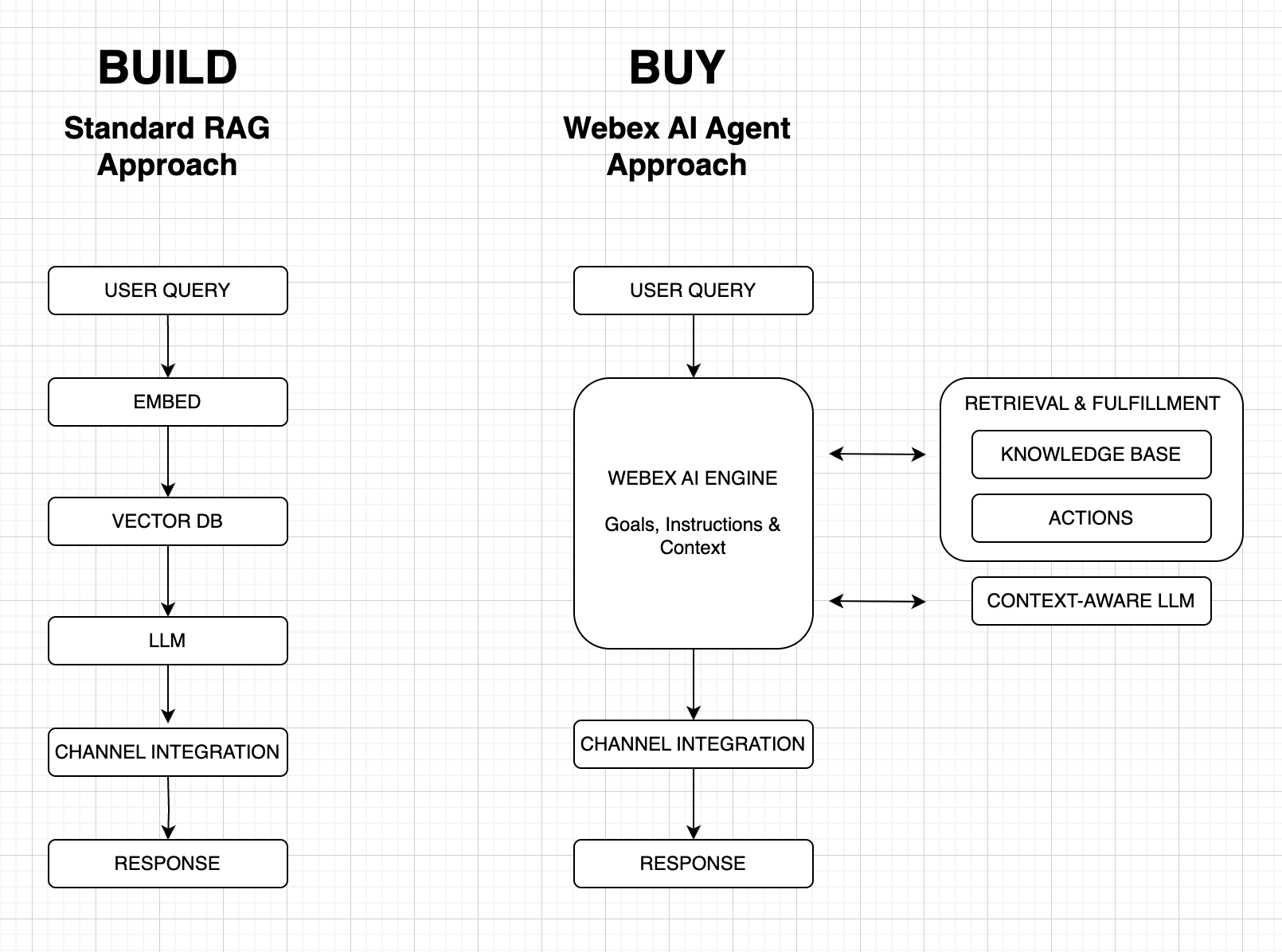
The build path has its risks. But that doesn't mean every off-the-shelf RAG tool is the answer either.
The Buying Trap (And Why It's Not Always the Answer)
So you decide not to build. You want speed. You want predictability. You want a RAG-powered solution you can just switch on and go.
That's when you find yourself browsing polished AI agent platforms. The ones that promise instant intelligence, plug-and-play integrations, and a future where bots are doing everything from answering questions to resolving tickets—and maybe even handling HR onboarding if you ask nicely.
It all looks good on paper—until it meets reality.
The Problem with Generic AI Agents
Many platforms today try to be a RAG assistant for everything:
- "Connect your PDFs, websites, SharePoint folders—we'll take care of the rest."
- "No code, no training, just magic."
But too often, they fail to answer the right question. They know how to retrieve content—but not how to apply it to your workflow, your policies, your tone.
They don't know when to escalate. They don't remember what matters. They can't hold a customer conversation with the subtlety and context that a trained agent can.
The Platform Problem: When AI Becomes an OS
The market naturally swung toward bundling. Platforms began pitching themselves as "agent operating systems"—AI, CRM, ticketing, analytics, workflows, automation—all rolled into one.
But I've seen what happens next:
- Outbound campaigns don't work the way you want.
- First contact resolution doesn't improve.
- Reporting becomes inconsistent or incomplete.
Because at the end of the day, contact center operations aren't just about language models. They're about data models, business logic, and hard-earned process maturity.
This Is Where "Buy" Becomes a Gamble
When you go for the shiny all-in-one AI suite, you're sometimes buying:
- Overhead you didn't ask for
- Interfaces your team doesn't use
- Assumptions that don't match how your business actually works
What you need isn't a bot that can "read documents." You need an agent that can:
- Understand the difference between answering a query and solving a problem
- Operate inside your real channels
- Work alongside your human agents—not just next to them
That's where experience matters—understanding how agents escalate, how contact context travels, how resolution gets tracked. And that's where buying becomes smarter—not riskier.
Enter Webex AI Agent – Solving the Right Problems, the Right Way
In all my work evaluating and deploying AI solutions, I've learned that the real test isn't what a platform can do. It's what it does well and consistently—especially under pressure.
That's where Webex AI Agent stands out. It doesn't try to solve every problem in AI. It focuses on the ones that actually slow teams down:
- Grounded answers with built-in retrieval logic
- Structured instructions instead of vague prompting
- Real context awareness, not just content parsing
- Omnichannel readiness, with security and compliance already built in
It doesn't try to be everything. It tries to be useful—and fast.
You can upload knowledge bases from URLs, PDFs, or docs. It gives responses with references, runs on intent-based instructions, and hands off to human agents when needed—with full metadata passed through.
One of the more subtle but powerful things it does is this: it doesn't leave customers hanging. If a retrieval takes longer—say, it's querying an external source or digging through structured content—the agent responds in stages. You'll see messages like "Let me look that up for you" or "Just a moment, checking the latest policy" before the final answer arrives.
That kind of pacing keeps customers engaged and builds trust—without having to fake confidence or overcommit to speed.
It plugs into existing workflows, not the other way around. And it's priced for real usage—not layered with complexity.
From what I've seen, that kind of focus is what separates tools that get tested from tools that actually get adopted.
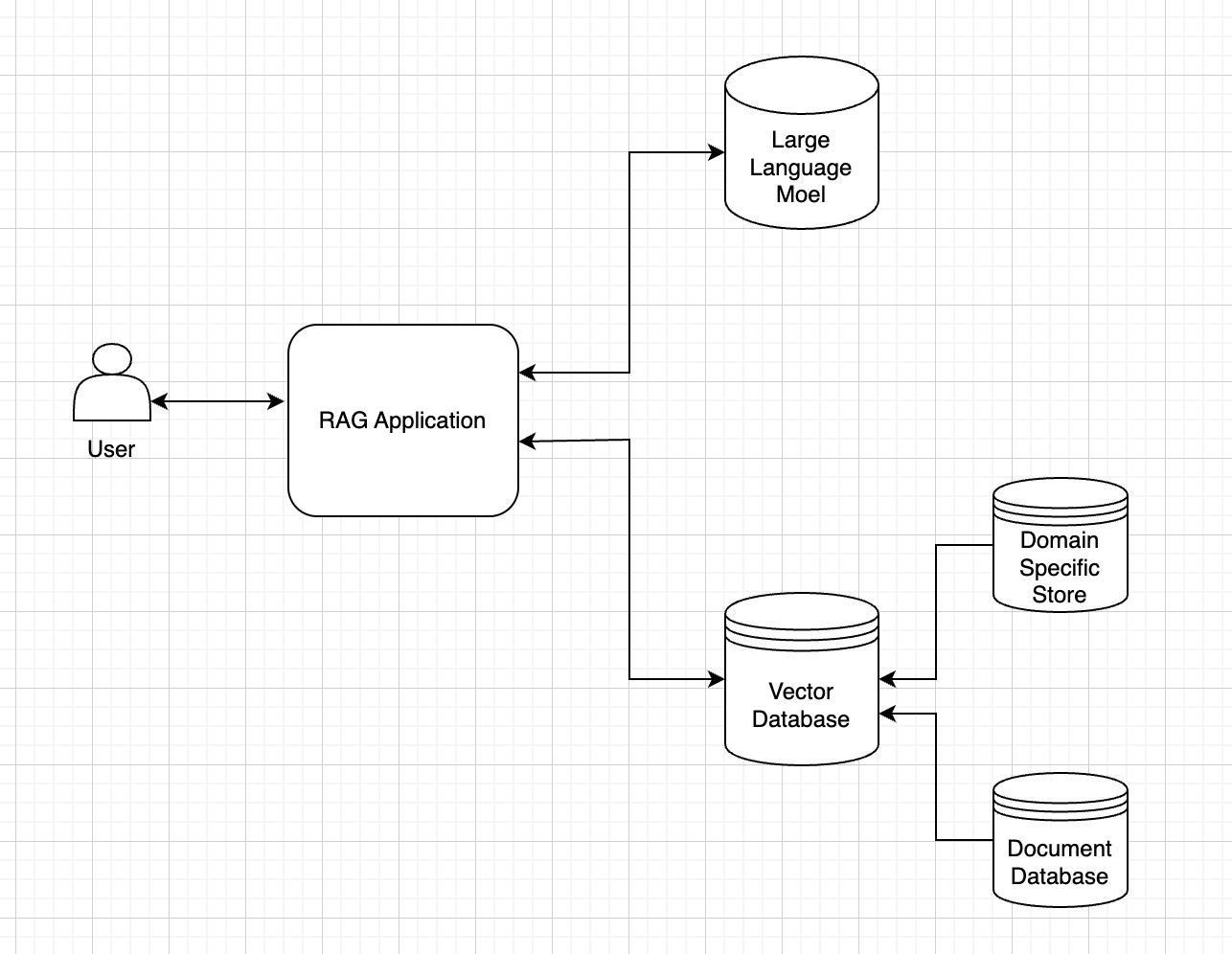
Webex AI Agent, on the other hand, adds instruction structure, context injection, and secure channel handoff on top of the RAG core.
Moments That Matter – When Urgency, Scale, and Trust Decide for You
Some decisions in tech are about control. Others are about cost. But sometimes, urgency makes the decision for you.
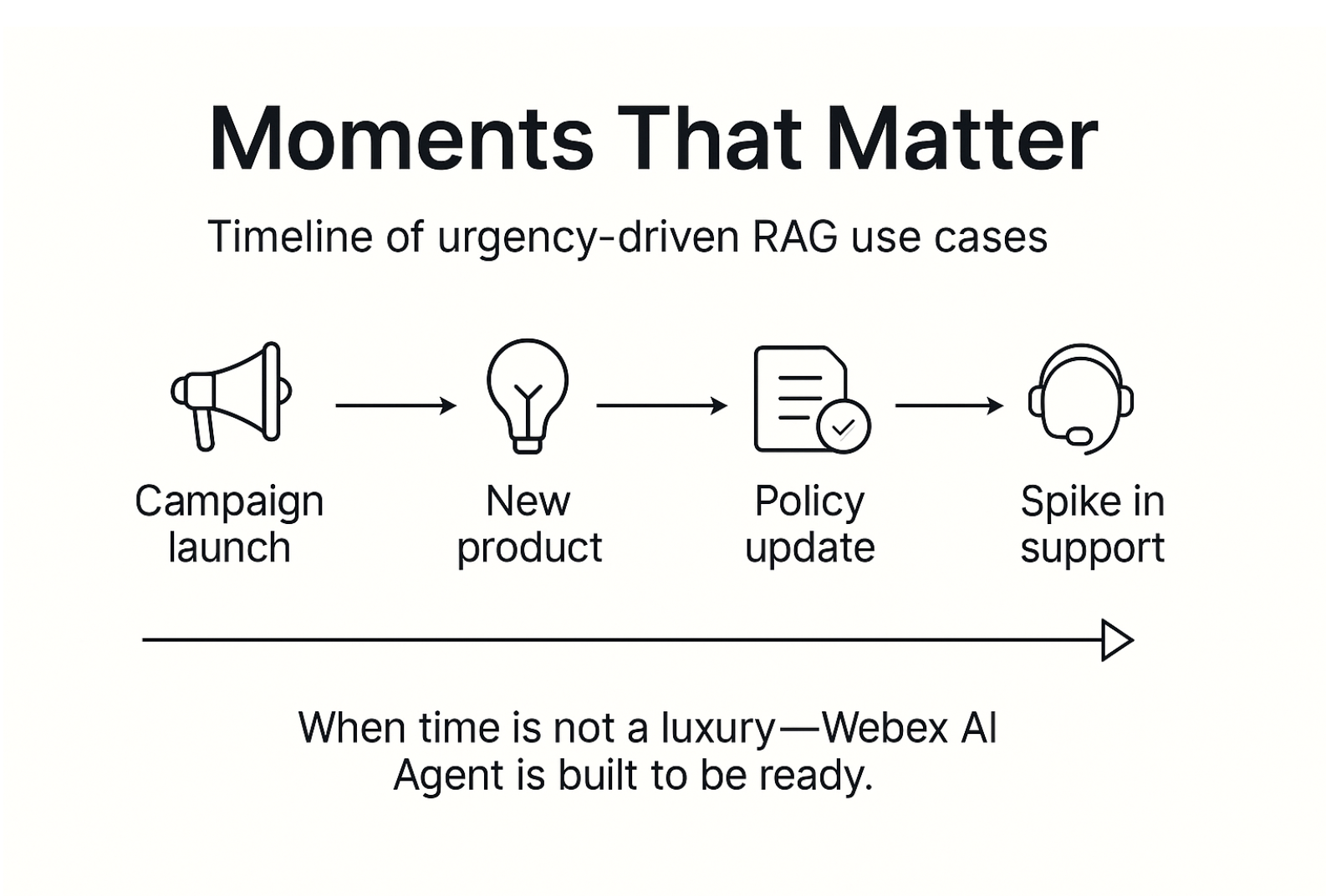
The business needs to run a time-sensitive campaign. A new product is going live, and support volume is about to spike. There's a policy update or compliance shift, and the information has to go out—fast, clearly, and accurately.
Or maybe your boss—and the marketing team—wants an AI agent helping customers and partners with guidance on the Webex AI Innovation Tour or showcasing Webex Customer Experience Solutions. It has to go live fast. And it has to work.
These are the moments where the cost of delay is real. And I've seen what happens when teams try to build in the middle of it—or buy something too generic to help.
You don't want to be wiring vector DBs or debugging prompt chains when your contact center is under pressure.
You need a solution that's already ready.
- Live in days, not quarters
- Grounded, accurate answers that build trust
- Built-in escalation and context awareness
- Enterprise-grade security already covered
- Pricing that flexes with need—not locked to licensing complexity
That's where Webex AI Agent makes a real difference. It's built to show up in these critical moments—where volume, urgency, and expectations meet.
And in those moments, I've seen teams realize something simple: You don't need to build clever. You need to deploy smart.
Final Thoughts – My Take
I've worked across both sides of this decision—helping teams build from scratch, and helping others choose solutions that needed to go live fast.
And what I've learned is this: Build vs Buy isn't a binary. It's a strategy call— shaped by urgency, skill set, long-term ownership, and operational risk.
If you have the capability to build, maintain, and evolve a RAG system— and you're doing it for strategic differentiation—go for it.
But if your goal is fast time to value, operational clarity, and scalable trust, then the question isn't about architecture—it's about what gets you working answers with the least friction.
That's why I've leaned into Webex AI Agent. It doesn't try to be everything—it tries to be dependable. And in real-world environments, dependable is underrated.
The value isn't in abstract capabilities—it's in having a digital agent that your customers trust, your agents can rely on, and your teams don't have to constantly debug.
If you're navigating this decision, ask yourself: What does your business need to do today, and what do you need to trust it with tomorrow? The answer will usually lead you in the right direction.
Whether you're leaning toward building or buying, Cisco can help with both. Our AI/ML teams work with customers to design and optimize bespoke architectures. And if you're looking to move fast with a ready-to-deploy, enterprise-grade solution, Webex AI Agent is built to get you there—securely, efficiently, and at scale.